The Slab Designer
Knowledge Articles and technical papers that go back to the original references, assumptions, and calculations behind slab-on-ground design guidance. Every topic has a short article for owners, developers, and contractors, and a technical paper for engineers. Free to read, cite, and download as PDF.
Both Articles Technical Papers
All topics Design Guidance and Standards Soil Support and k-Value Joints and Load Transfer Curling and Shrinkage Reinforcement and Restraint Thickness and Slab Systems History of Pavement and Slab Design Industry and Practice
24 results
Technical Paper | TSD-01TP
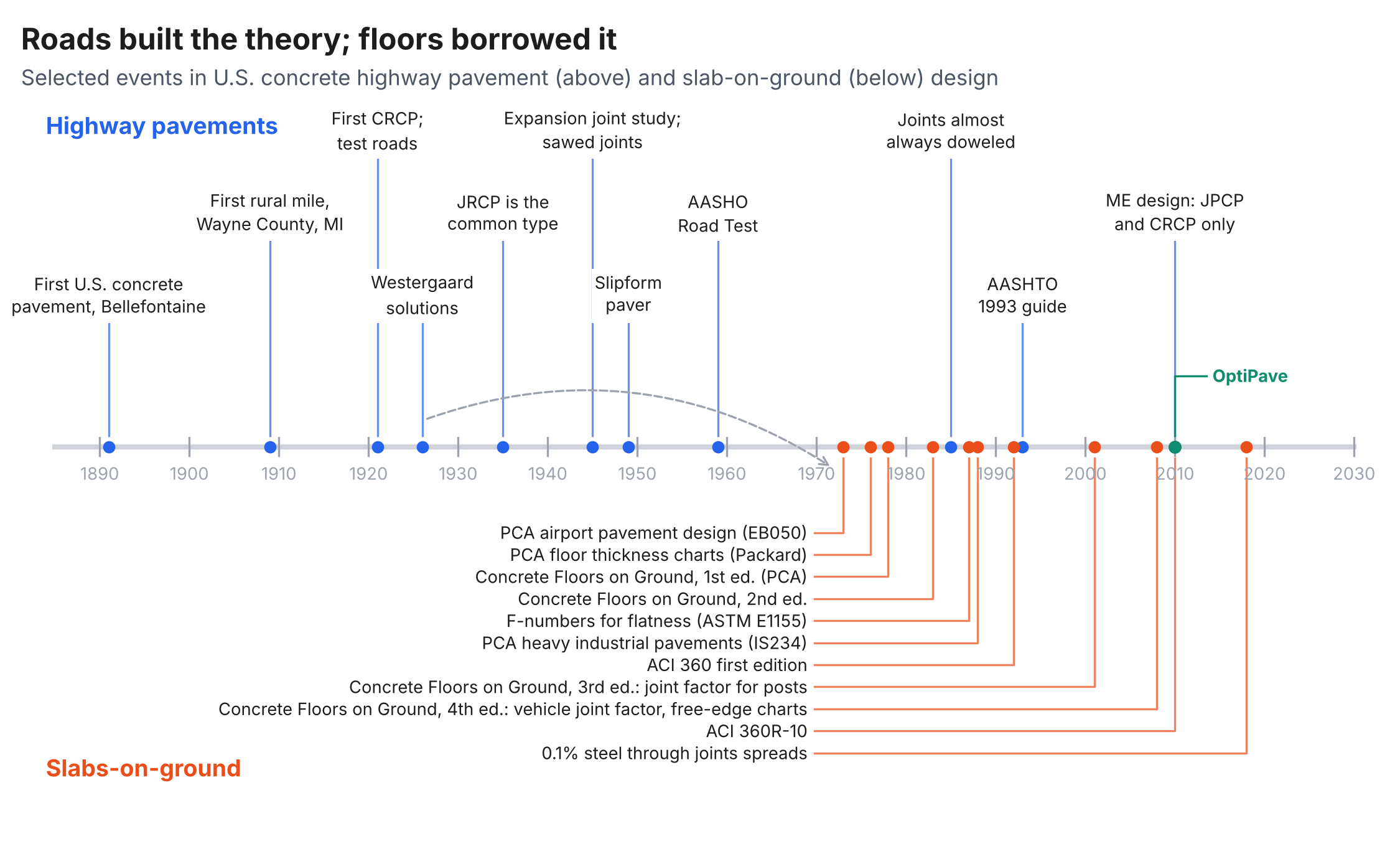
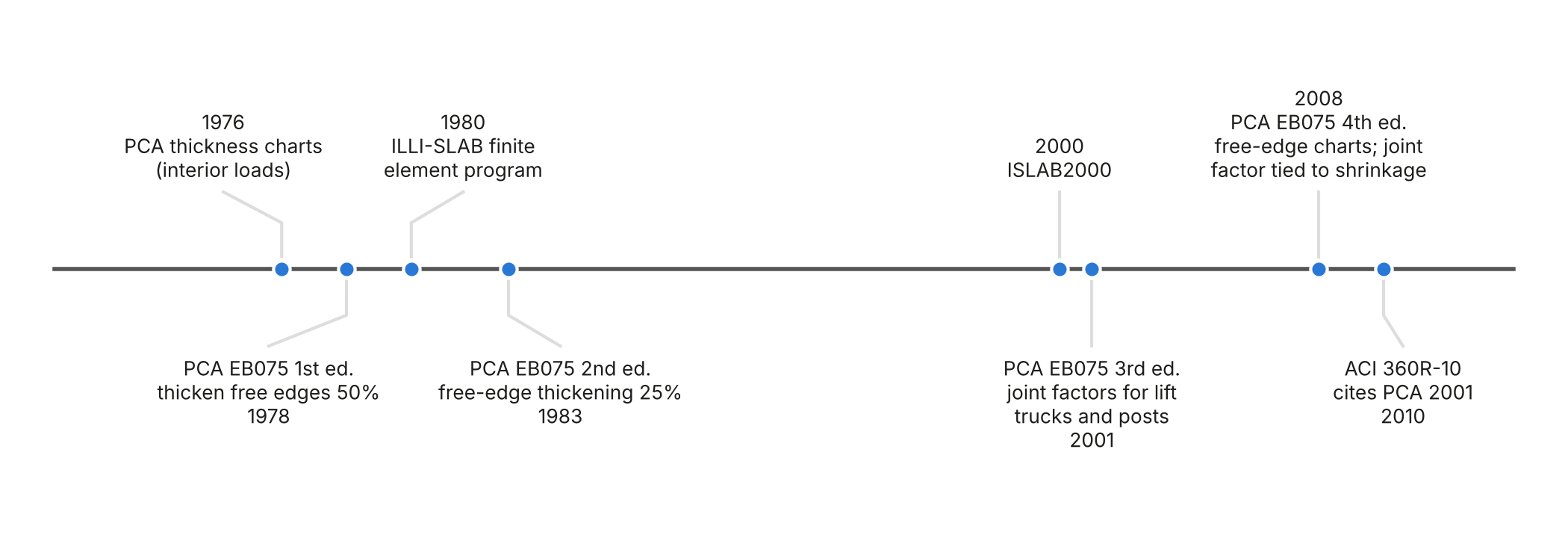
A century of pavement design organized around the problems that drove it, set alongside the development of slabs-on-ground.
Article | TSD-01A
How each pavement problem produced a fix, how floors borrowed the theory, and where floors now lag the roads.
History of Pavement and Slab Design
Technical Paper | TSD-02TP
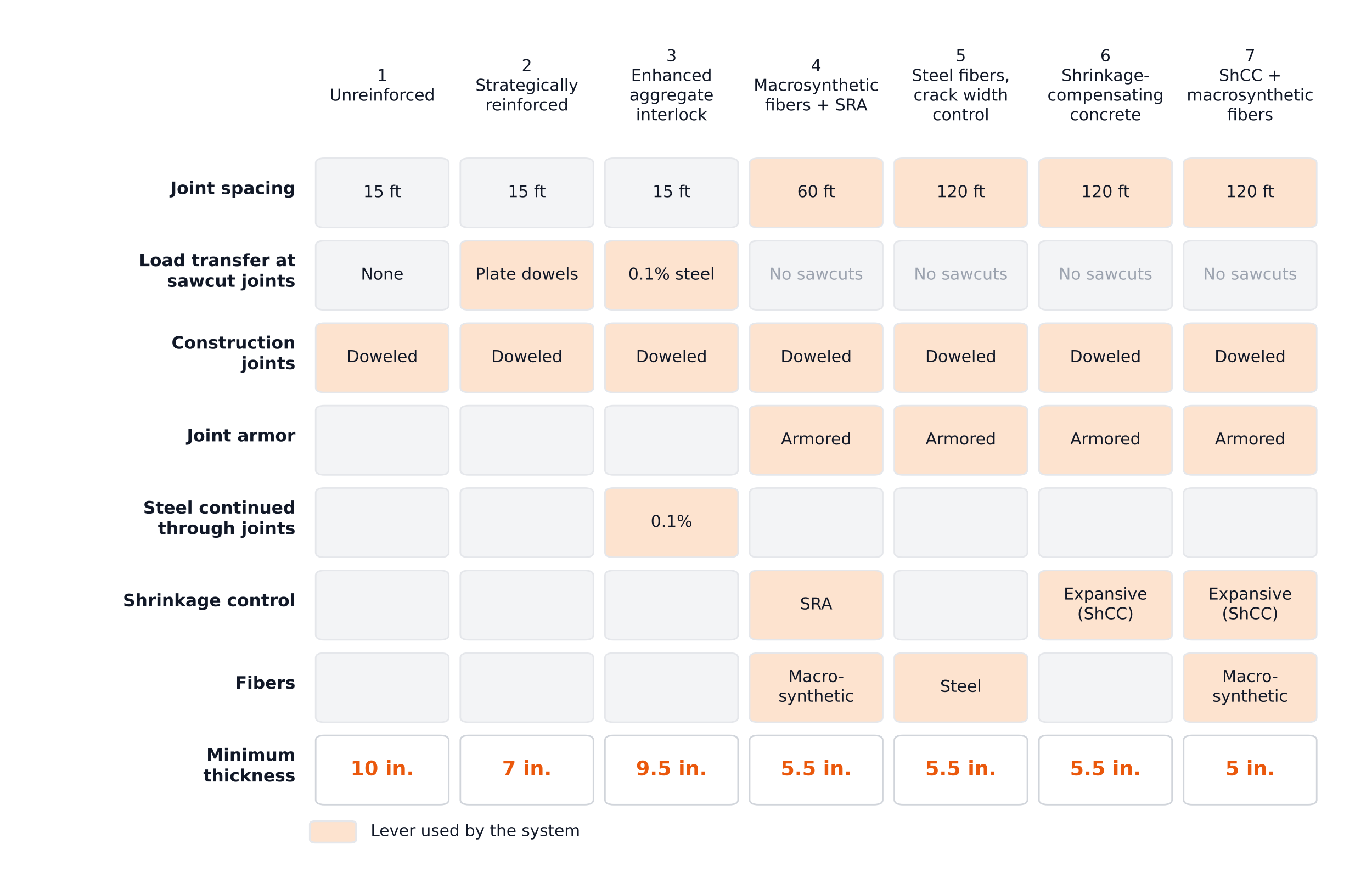
Proposes organizing slab guidance around physical design levers so new systems are evaluated as engineering, not products.
Article | TSD-02A
Industrial floors innovated without an industry program behind them. The guidance hasn't kept up.
Industry and Practice
Technical Paper | TSD-03TP
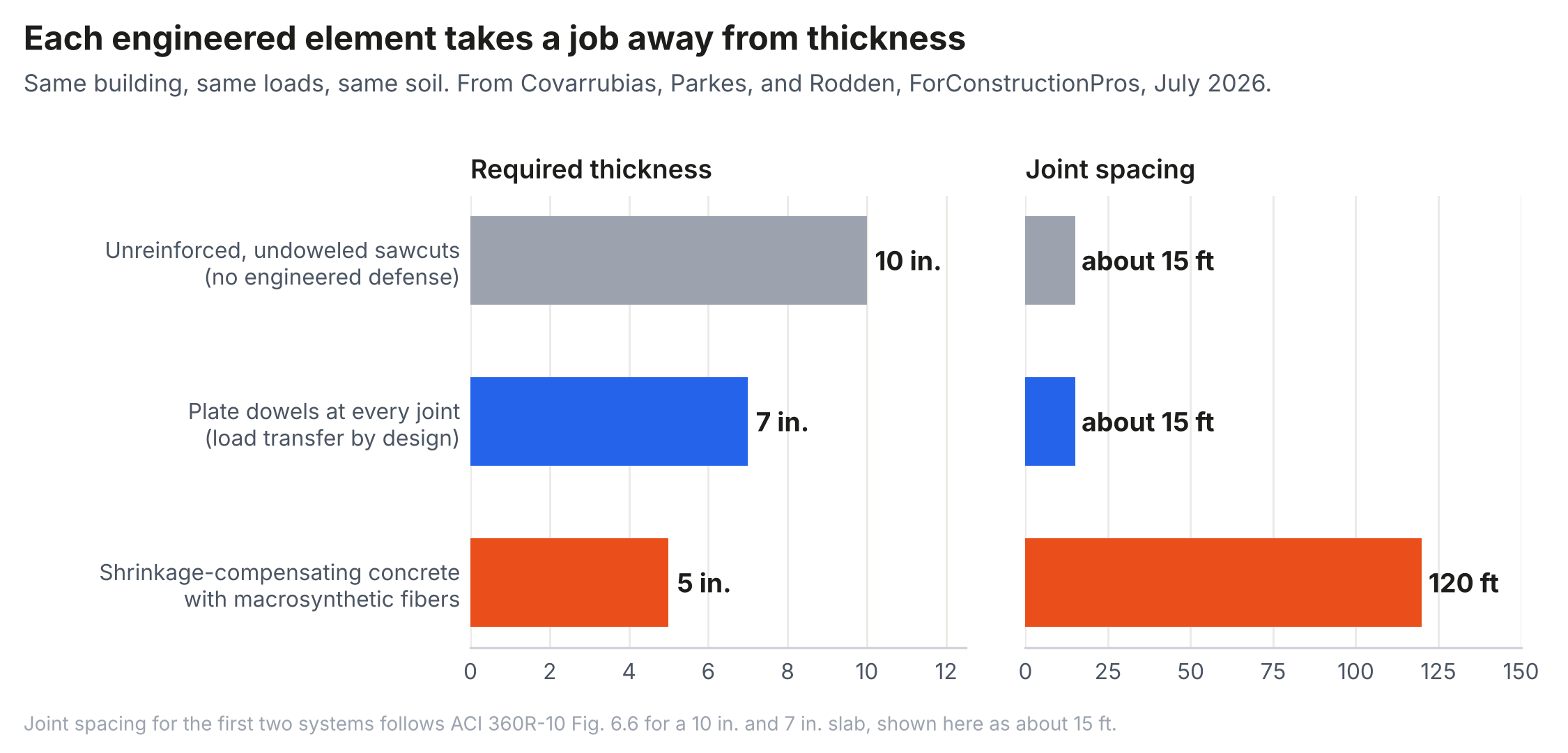
Shows how load transfer, curl, support stiffness, and surface demands, not thickness alone, govern slab performance.
Article | TSD-03A
Why the thickest slab is often the least engineered one, and what the roads learned when they measured it.
Thickness and Slab Systems
Technical Paper | TSD-04TP
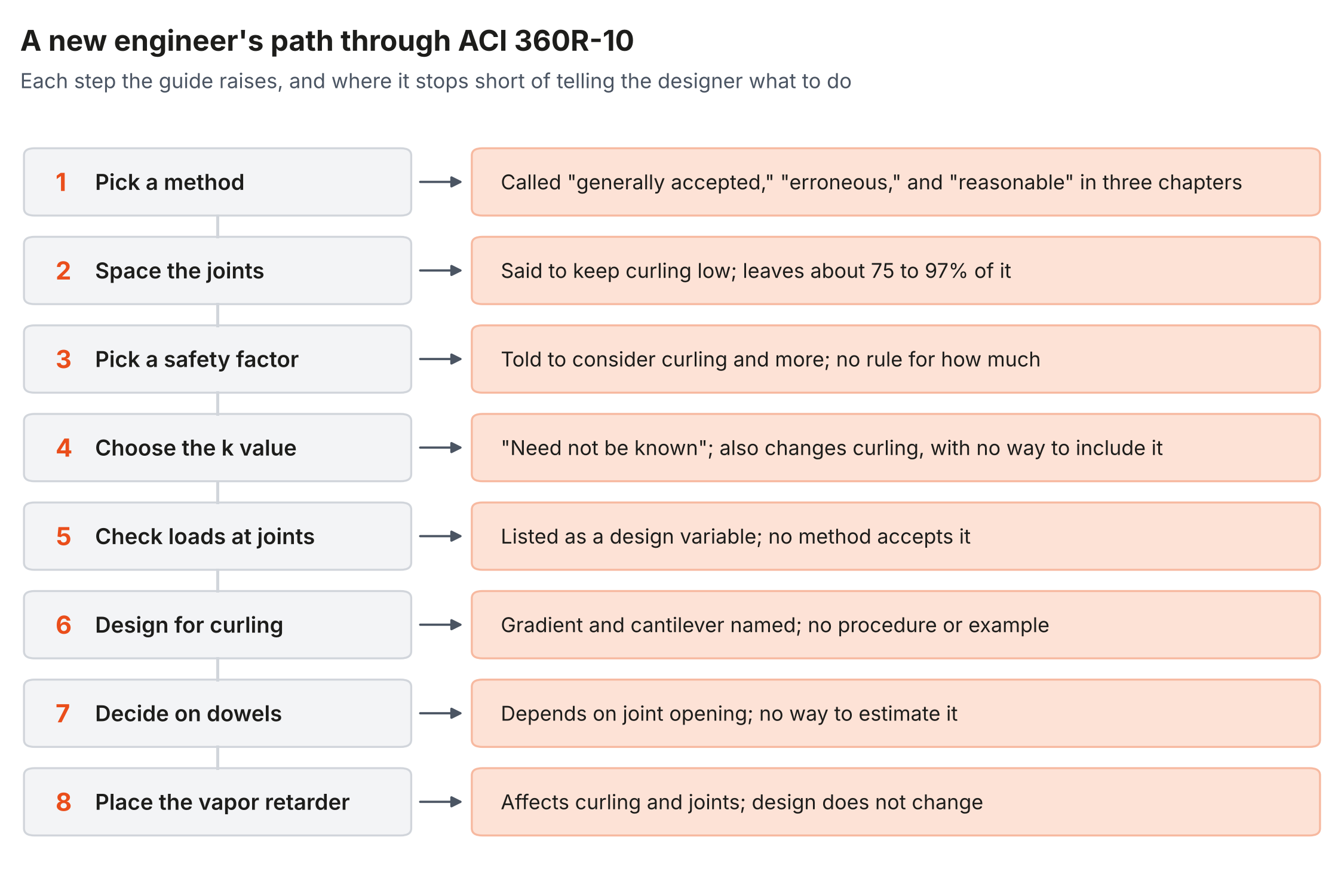
Audits eight design decisions in ACI 360R-10 for whether each issue raised is carried through to a design method.
Article | TSD-04A
A new engineer follows ACI 360R-10 step by step and finds the places it raises an issue and stops.
Design Guidance and Standards
Technical Paper | TSD-05TP
Traces how PCA added a joint factor in 2001 and 2008 that ACI 360R-10's thickness procedure still omits.
Article | TSD-05A
What owners should know about the trap built into the industry's main slab design guide.
Design Guidance and Standards
Technical Paper | TSD-06TP
Compares CBR-to-k correlations with a calibrated elastic layered method and evaluates the SSI long-term k-value approach.
Article | TSD-06A
Where 'CBR 3 = k 100 psi/in.' came from, why a settlement-reduced k-value isn't a stiffness, and who should own long-term settlement.
Soil Support and k-Value
Technical Paper | TSD-07TP
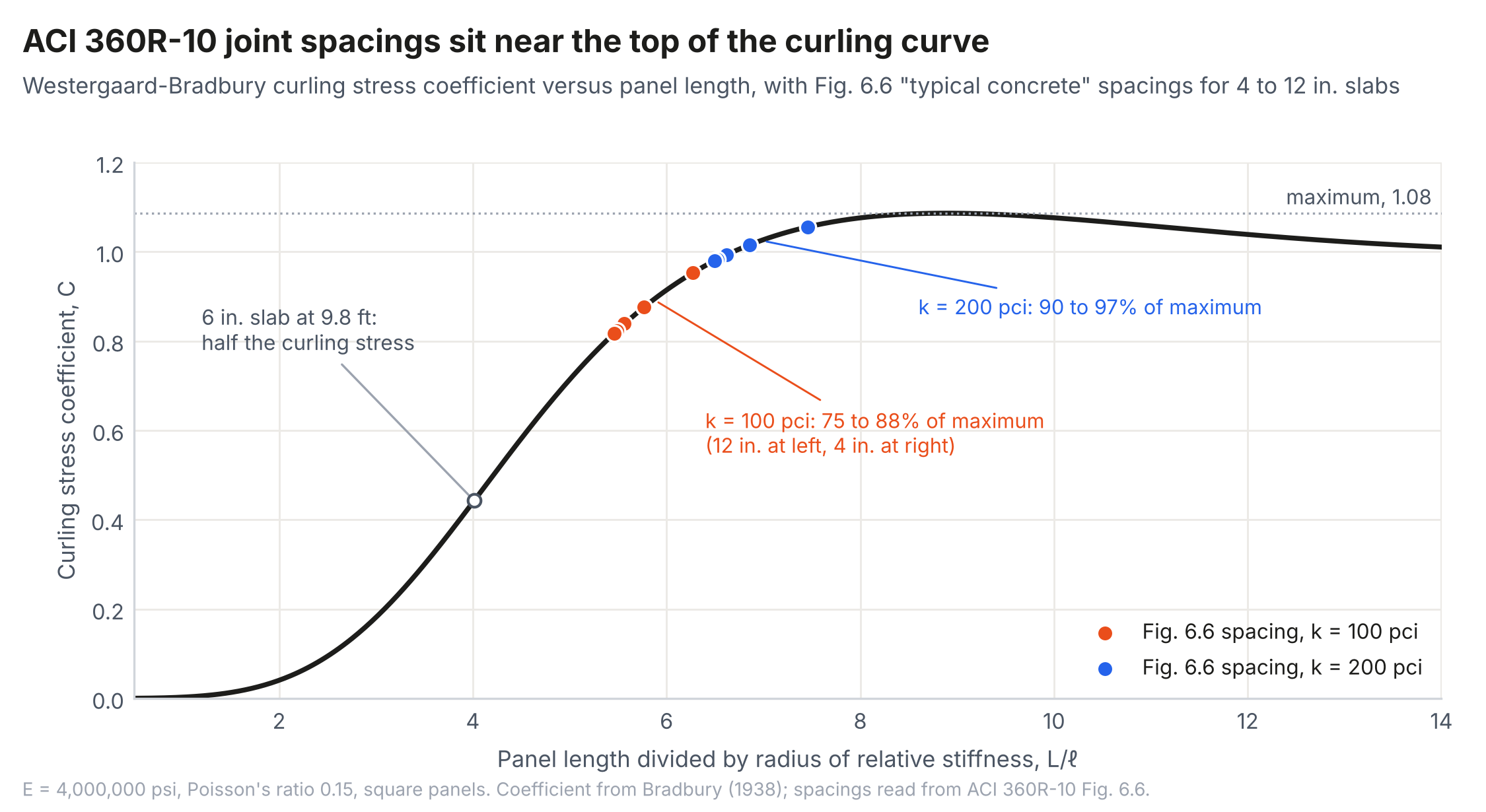
Checks the Fig. 6.6 joint spacing and the Table 5.2 factor of safety against the guide's own curling and fatigue data.
Article | TSD-07A
The guide says its joint spacing keeps curl low and its factor of safety covers the rest. Its own numbers say otherwise.
Curling and Shrinkage
Technical Paper | TSD-08TP
Mechanistic-empirical design and contractor cost survey for one spec warehouse with three joint details.
Article | TSD-08A
The joint detail changes how thick a spec building slab needs to be, and the cost numbers say doweling pays.
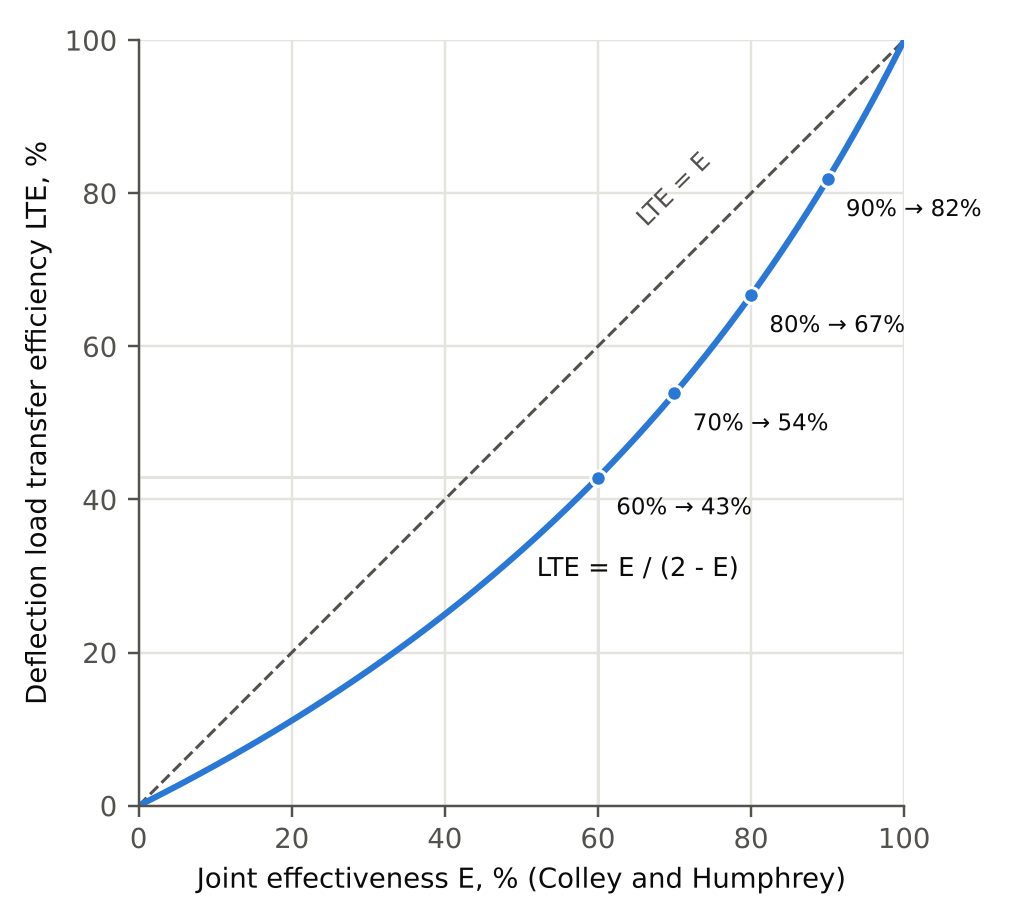
Joints and Load Transfer
Technical Paper | TSD-09TP
Shows the section-level solution behind the 0.1% limit does not address force transfer across a joint or redistribution of opening.
Article | TSD-09A
The 0.1% limit for continuous steel through sawcuts rests on a table that answers a different question than the joints ask.
Reinforcement and Restraint
Technical Paper | TSD-10TP
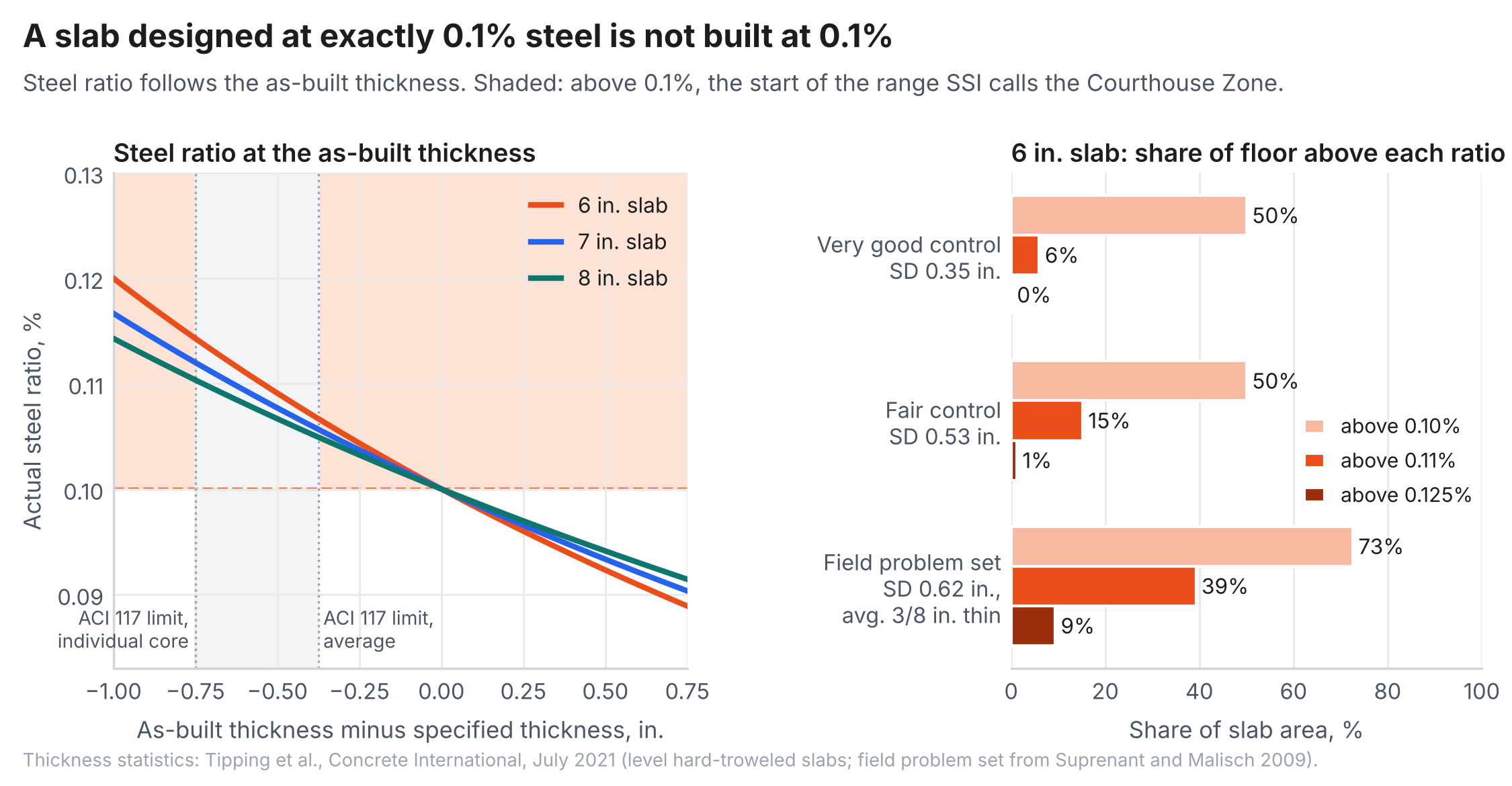
Thickness tolerances push as-built steel ratios past 0.1%, and the highway record of JRCP shows where that detail leads.
Article | TSD-10A
Light steel through the joints has a name in highway engineering, and most DOTs stopped building it decades ago.
Reinforcement and Restraint
Technical Paper | TSD-11TP
Validates a rebuild of PCA's 1973 airport method and explains why its flexible inputs do not make it an industrial floor design basis.
Article | TSD-11A
Why an airport design method ended up sizing forklift floors, and why matching inputs is not the same as matching the problem.
Design Guidance and Standards
Technical Paper | TSD-12TP
Summarizes the 2026 Concrete International and Concrete articles that set out why the Westergaard and Meyerhof methods fall short for modern floors and how the SLABS framework addresses it.
Article | TSD-12A
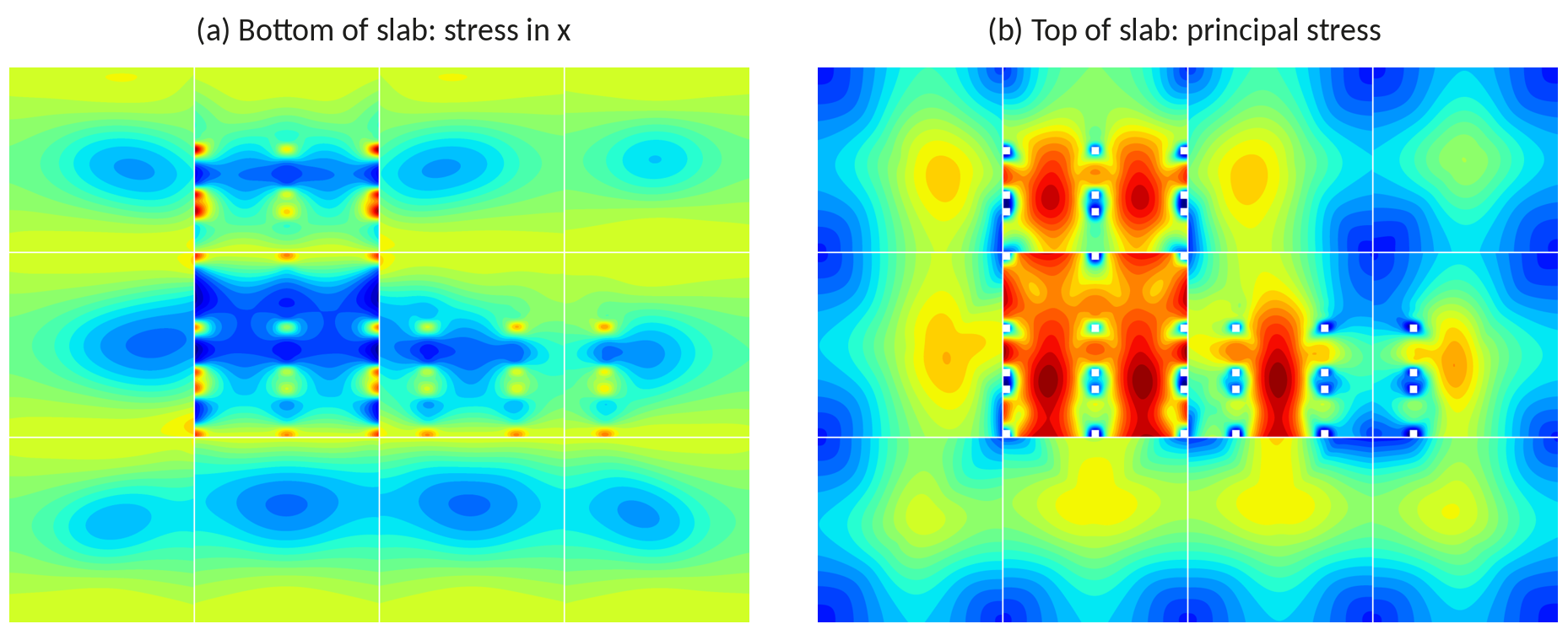
A plain-language summary of our Concrete International and Concrete articles, and why, in our rack example, the highest stress is where the legacy methods don't look.
Design Guidance and Standards